.png)
How Long Do Carbon Fiber Pool Cues Last Compared to Wood Cues?
Every serious pool player faces a critical investment decision: choosing a cue that will be a reliable partner for years, if not decades. For centuries, the answer was found in the seasoned grains of fine hardwoods. Today, a new contender built from space-age composites promises a different kind of longevity. This brings us to the essential question: How Long Do Carbon Fiber Pool Cues Last Compared to Wood Cues? And more importantly, how does this lifespan compare to the enduring legacy of a traditional wood cue? The answer isn't a simple number—it's a fundamental contrast between an organic material subject to nature's whims and an engineered one designed to defy them. Understanding this distinction is key to valuing your investment. This analysis will dissect the factors that determine the functional lifespan of both, providing a clear-eyed view of durability, performance decay, and what "lasting" truly means for your game, especially when you're considering a modern carbon cue.
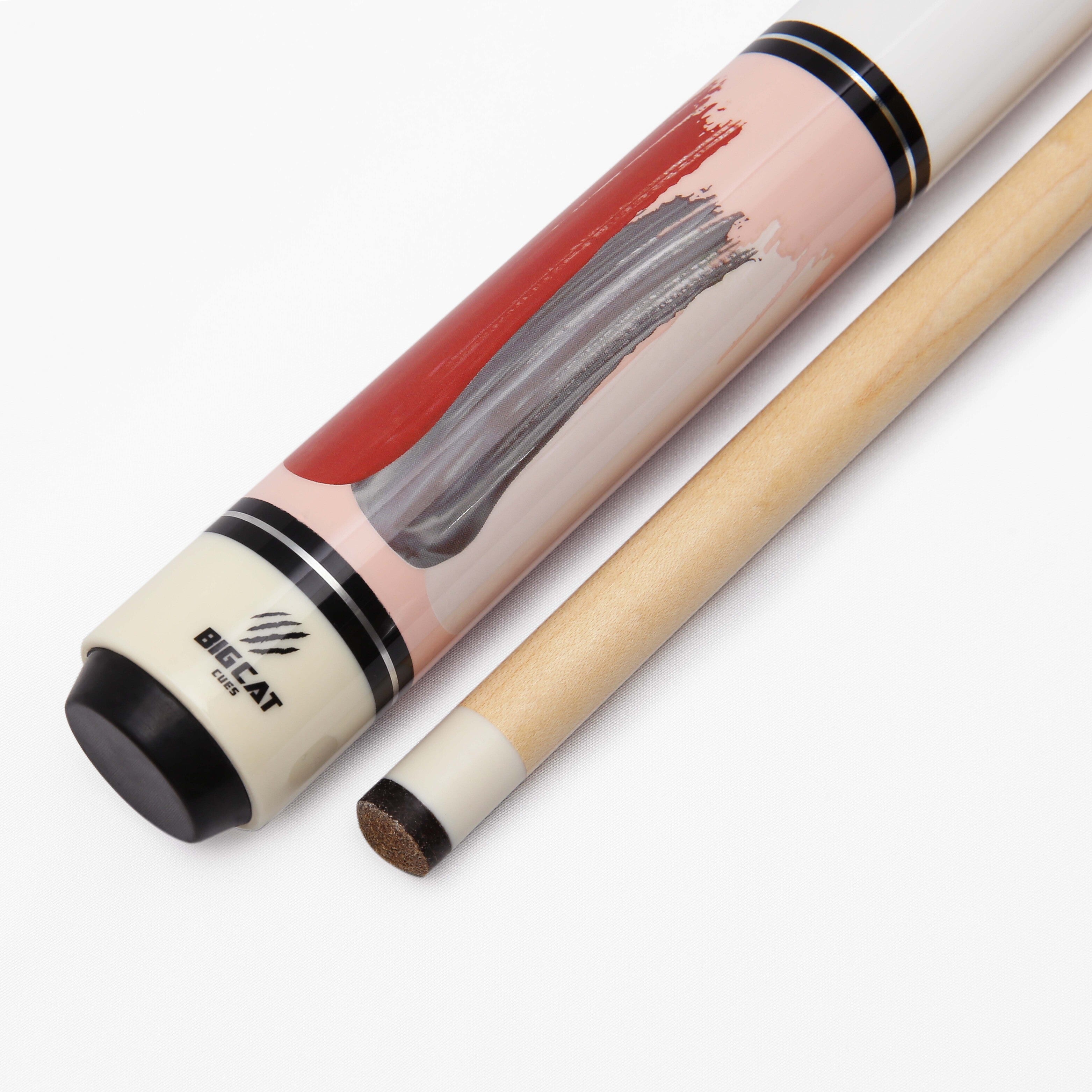
Part 1: The Lifespan of a Wooden Cue – A Story of Managed Decline
A well-crafted maple cue from a reputable maker is built to last generations. However, its longevity is a constant, active battle against inevitable entropy. Its lifespan is best viewed in phases.
The Enemies of Longevity:
The Inevitable Warp: Wood is hygroscopic. It absorbs and releases moisture from the air, expanding and contracting with changes in humidity and temperature. This causes warping—a bend that may be subtle but is catastrophic for performance. A warped cue loses its true roll, its aim reference, and, most critically, its consistent deflection (squirt) profile. This is the single most common reason a wood cue's performance lifespan ends.
Physical Vulnerability: The surface of a sealed wood shaft is relatively soft. Dings from impacts, compression rings from forceful hits, and general wear from play create imperfections. These affect the smooth glide through your bridge hand and can disrupt the energy transfer of your stroke.
Internal Fatigue and "Dead Spots": Over years of repetitive impact, wood fibers can compress in specific areas, creating dead spots that feel unresponsive and dull. The cue loses its lively "hit" and its feedback becomes muddy.
Finish Degradation: The protective lacquer, oil, or wax finish wears down, yellows, or becomes sticky. It requires periodic refinishing—a process that, if done repeatedly, slowly reduces the shaft's diameter and alters its original character.
Realistic Wood Cue Lifespan:
With obsessive, climate-controlled care, a wood cue can remain a straight, functional object for 30+ years. However, its peak performance window—where it is perfectly straight, vibrantly responsive, and free from performance-altering wear—is typically much shorter. Under regular play conditions, this peak period often lasts 5 to 15 years. After that, it may become a cherished backup or a display piece, but its role as a primary, high-performance instrument is usually compromised by environmental wear. Its story is one of graceful, but inevitable, aging.
Part 2: The Lifespan of a Carbon Fiber Pool Cue – Engineered for Permanence
A carbon cue is constructed from a composite: thousands of carbon filaments in a woven fabric, locked in a rigid polymer resin matrix. This human-made structure is designed from the outset to eliminate the very weaknesses that limit wood.
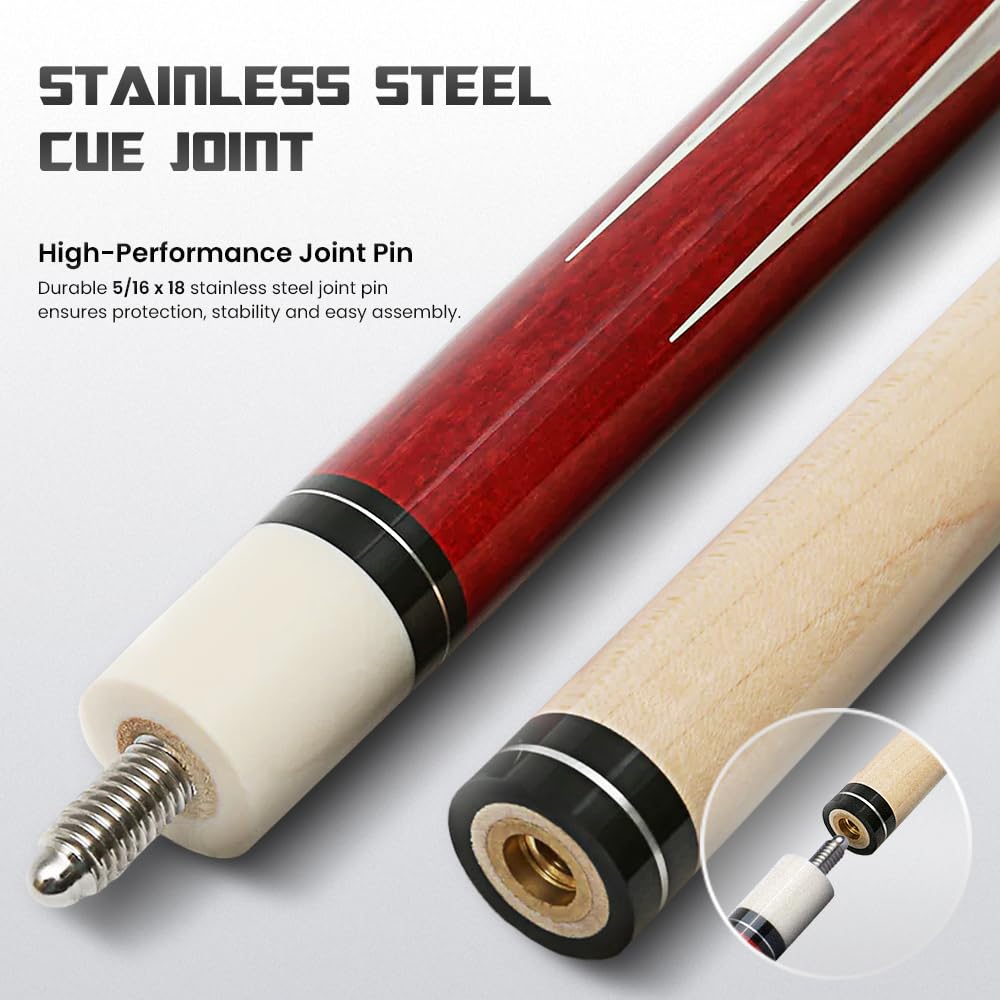
The Foundations of Its Longevity:
The Warp-Proof Guarantee: This is the most significant advantage. Carbon fiber is non-hygroscopic and thermally stable. It does not interact with atmospheric moisture. A carbon cue shaft that is straight when it leaves the factory will remain perfectly straight for a century, regardless of whether it's in a humid basement or a dry desert. This alone eliminates the #1 killer of wooden cue performance.
Extreme Surface Hardness and Resilience: The cured resin surface is exceptionally hard and dense. It is highly resistant to dings, dents, and compression rings from normal play. Chalk dust and skin oils sit on the surface; they do not impregnate the material, meaning they can be completely cleaned off without damaging the substrate underneath.
Structural Integrity and Fatigue Resistance: The composite matrix does not suffer from material fatigue in the way wood does. There are no fibers to compress over time, meaning it will not develop dead spots. The energy transfer, harmonic response, and deflection characteristics are locked in permanently.
Low-Maintenance, Durable Finish: The high-gloss clear coat is typically a UV-stable epoxy, resistant to yellowing and chemical degradation. It maintains its slickness with simple cleaning and never requires sanding or refinishing.
Realistic Carbon Cue Lifespan:
Barring catastrophic physical damage (e.g., being run over by a car or subjected to extreme, focused force it was not designed for), a high-quality carbon cue has a functional performance lifespan that can genuinely be described as a lifetime or longer. There is no "break-in" period and no "wear-out" period. The cue you use in your first league match will perform identically in every measurable way to the cue you use 25 years later. The lifespan conversation shifts from the shaft failing to the potential need to replace consumable parts: the tip, and very rarely, the ferrule.
The Critical Caveat: The Spectrum of Quality
This comparison assumes a well-made carbon cue from a manufacturer using proper materials and engineering. A poorly made carbon shaft with substandard resin, improper curing, or flawed layup can de-laminate, have a poor finish, or offer inconsistent performance from the start. Similarly, a legendary wood cue from a master maker, stored impeccably, can outlast a cheap carbon fiber product.
When comparing equivalent tiers of craftsmanship—a custom maple cue from a renowned maker versus a premium carbon cue from a respected brand—the inherent material advantages of carbon fiber grant it a superior and far more predictable lifespan with zero performance decay.
Conclusion: A Lifetime of Consistency vs. A Legacy of Character
So, how long does a carbon cue last compared to a wood cue? The answer reveals a philosophical divide in what "lasting" means.
A wood cue's lifespan is a testament to careful stewardship and acquired character. Its longevity is an achievement, a story of survival against the elements. Its value is in its history, its unique patina, and the warmth of a living material. However, its performance is on a slow, inevitable arc of change.
A carbon cue's lifespan is a function of engineered perfection and permanent specification. It is built to be a timeless, unchanging standard. Its value is in its unwavering reliability, its promise that the performance you purchase today is the performance you will own forever. Its story is not of aging, but of enduring consistency.
For the player who views their cue first and foremost as a performance instrument, the carbon cue offers a functional lifespan that simply dwarfs that of wood. It is a one-time investment in a permanent performance baseline. While a wood cue can be a beloved heirloom, a carbon cue is a lifetime guarantee of precision, making it the definitive choice for the player who prioritizes an unchanging, reliable foundation for their game, now and for decades to come.
Every serious pool player faces a critical investment decision: choosing a cue that will be a reliable partner for years, if not decades. For centuries, the answer was found in the seasoned grains of fine hardwoods. Today, a new contender built from space-age composites promises a different kind of longevity. This brings us to the essential question: How Long Do Carbon Fiber Pool Cues Last Compared to Wood Cues? And more importantly, how does this lifespan compare to the enduring legacy of a traditional wood cue? The answer isn't a simple number—it's a fundamental contrast between an organic material subject to nature's whims and an engineered one designed to defy them. Understanding this distinction is key to valuing your investment. This analysis will dissect the factors that determine the functional lifespan of both, providing a clear-eyed view of durability, performance decay, and what "lasting" truly means for your game, especially when you're considering a modern carbon cue.
Part 1: The Lifespan of a Wooden Cue – A Story of Managed Decline
A well-crafted maple cue from a reputable maker is built to last generations. However, its longevity is a constant, active battle against inevitable entropy. Its lifespan is best viewed in phases.
The Enemies of Longevity:
The Inevitable Warp: Wood is hygroscopic. It absorbs and releases moisture from the air, expanding and contracting with changes in humidity and temperature. This causes warping—a bend that may be subtle but is catastrophic for performance. A warped cue loses its true roll, its aim reference, and, most critically, its consistent deflection (squirt) profile. This is the single most common reason a wood cue's performance lifespan ends.
Physical Vulnerability: The surface of a sealed wood shaft is relatively soft. Dings from impacts, compression rings from forceful hits, and general wear from play create imperfections. These affect the smooth glide through your bridge hand and can disrupt the energy transfer of your stroke.
Internal Fatigue and "Dead Spots": Over years of repetitive impact, wood fibers can compress in specific areas, creating dead spots that feel unresponsive and dull. The cue loses its lively "hit" and its feedback becomes muddy.
Finish Degradation: The protective lacquer, oil, or wax finish wears down, yellows, or becomes sticky. It requires periodic refinishing—a process that, if done repeatedly, slowly reduces the shaft's diameter and alters its original character.
Realistic Wood Cue Lifespan:
With obsessive, climate-controlled care, a wood cue can remain a straight, functional object for 30+ years. However, its peak performance window—where it is perfectly straight, vibrantly responsive, and free from performance-altering wear—is typically much shorter. Under regular play conditions, this peak period often lasts 5 to 15 years. After that, it may become a cherished backup or a display piece, but its role as a primary, high-performance instrument is usually compromised by environmental wear. Its story is one of graceful, but inevitable, aging.
Part 2: The Lifespan of a Carbon Fiber Pool Cue – Engineered for Permanence
A carbon cue is constructed from a composite: thousands of carbon filaments in a woven fabric, locked in a rigid polymer resin matrix. This human-made structure is designed from the outset to eliminate the very weaknesses that limit wood.
The Foundations of Its Longevity:
The Warp-Proof Guarantee: This is the most significant advantage. Carbon fiber is non-hygroscopic and thermally stable. It does not interact with atmospheric moisture. A carbon cue shaft that is straight when it leaves the factory will remain perfectly straight for a century, regardless of whether it's in a humid basement or a dry desert. This alone eliminates the #1 killer of wooden cue performance.
Extreme Surface Hardness and Resilience: The cured resin surface is exceptionally hard and dense. It is highly resistant to dings, dents, and compression rings from normal play. Chalk dust and skin oils sit on the surface; they do not impregnate the material, meaning they can be completely cleaned off without damaging the substrate underneath.
Structural Integrity and Fatigue Resistance: The composite matrix does not suffer from material fatigue in the way wood does. There are no fibers to compress over time, meaning it will not develop dead spots. The energy transfer, harmonic response, and deflection characteristics are locked in permanently.
Low-Maintenance, Durable Finish: The high-gloss clear coat is typically a UV-stable epoxy, resistant to yellowing and chemical degradation. It maintains its slickness with simple cleaning and never requires sanding or refinishing.
Realistic Carbon Cue Lifespan:
Barring catastrophic physical damage (e.g., being run over by a car or subjected to extreme, focused force it was not designed for), a high-quality carbon cue has a functional performance lifespan that can genuinely be described as a lifetime or longer. There is no "break-in" period and no "wear-out" period. The cue you use in your first league match will perform identically in every measurable way to the cue you use 25 years later. The lifespan conversation shifts from the shaft failing to the potential need to replace consumable parts: the tip, and very rarely, the ferrule.
The Critical Caveat: The Spectrum of Quality
This comparison assumes a well-made carbon cue from a manufacturer using proper materials and engineering. A poorly made carbon shaft with substandard resin, improper curing, or flawed layup can de-laminate, have a poor finish, or offer inconsistent performance from the start. Similarly, a legendary wood cue from a master maker, stored impeccably, can outlast a cheap carbon fiber product.
When comparing equivalent tiers of craftsmanship—a custom maple cue from a renowned maker versus a premium carbon cue from a respected brand—the inherent material advantages of carbon fiber grant it a superior and far more predictable lifespan with zero performance decay.
Conclusion: A Lifetime of Consistency vs. A Legacy of Character
So, how long does a carbon cue last compared to a wood cue? The answer reveals a philosophical divide in what "lasting" means.
A wood cue's lifespan is a testament to careful stewardship and acquired character. Its longevity is an achievement, a story of survival against the elements. Its value is in its history, its unique patina, and the warmth of a living material. However, its performance is on a slow, inevitable arc of change.
A carbon cue's lifespan is a function of engineered perfection and permanent specification. It is built to be a timeless, unchanging standard. Its value is in its unwavering reliability, its promise that the performance you purchase today is the performance you will own forever. Its story is not of aging, but of enduring consistency.
For the player who views their cue first and foremost as a performance instrument, the carbon cue offers a functional lifespan that simply dwarfs that of wood. It is a one-time investment in a permanent performance baseline. While a wood cue can be a beloved heirloom, a carbon cue is a lifetime guarantee of precision, making it the definitive choice for the player who prioritizes an unchanging, reliable foundation for their game, now and for decades to come.